Concorso internazionale RIBA “The Wall. A Million Bricks” – fase 2, progetto finalista
Anno: 2019
♦ Progetto finalista
Dalla prima alla seconda fase del concorso / From the first to the second competition stage
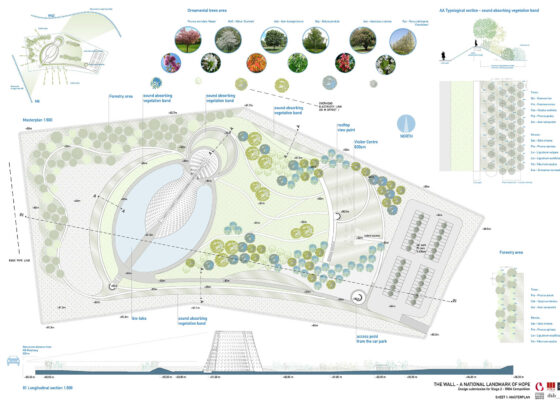
Dopo il progetto vincitore della prima fase del concorso RIBA “The Wall. A Million Bricks”, il nostro team è stato selezionato tra i finalisti invitati a sviluppare ulteriormente il concept nella fase 2. Questa seconda fase ha richiesto un livello di approfondimento maggiore, con attenzione non solo all’immagine architettonica del muro ma anche alla relazione con il paesaggio, alla percorribilità degli spazi e all’esperienza del visitatore.
La sfida è stata quella di mantenere intatta l’idea originaria – un’architettura sospesa sull’acqua, tra astrazione e sacralità – rendendola allo stesso tempo più definita nelle proporzioni, negli spazi interni ed esterni e nell’articolazione del percorso.
After winning the first stage of the RIBA competition “The Wall. A Million Bricks”, our team was shortlisted among the finalists invited to further develop the concept in stage 2. This second phase required a deeper level of design, focusing not only on the architectural image of the wall but also on its relationship with the landscape, the sequence of spaces and the overall visitor experience. The main challenge was to preserve the original idea – an architecture suspended on water, between abstraction and sacredness – while making it more precise in terms of proportions, inner and outer spaces and the articulation of the path.
Sviluppo del concept: il muro sospeso e l’acqua / Development of the concept: the suspended wall and water
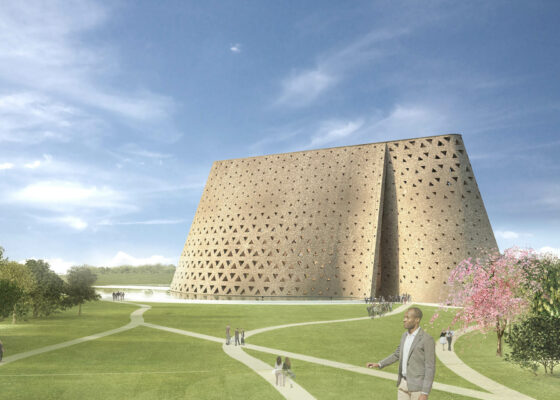
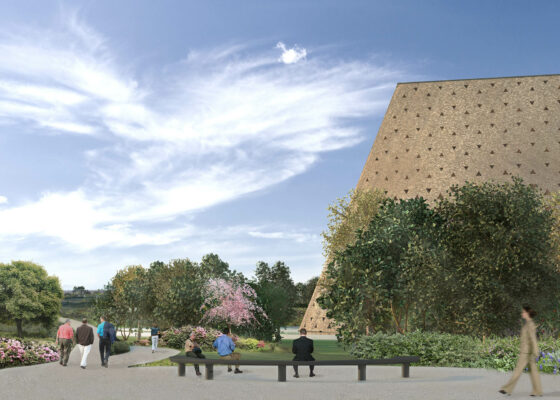
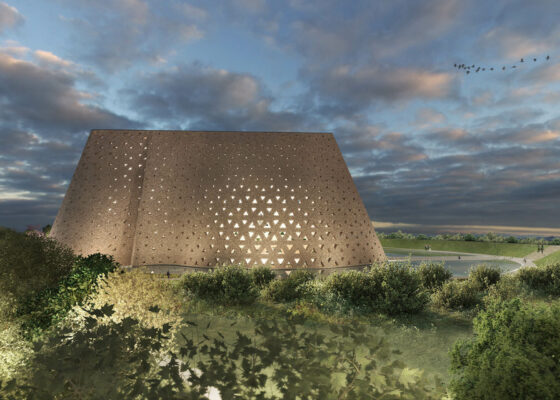
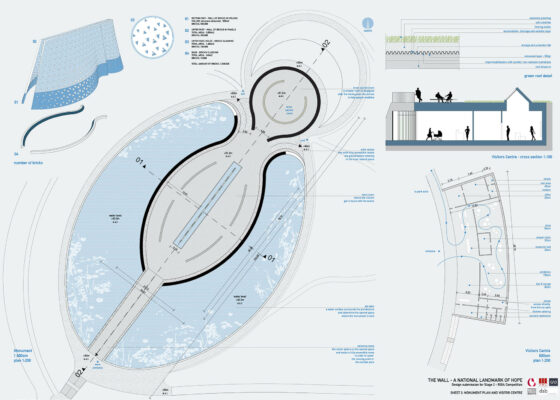
In continuità con la prima fase, The Wall resta appoggiato su uno specchio d’acqua che lo separa dal suolo e lo colloca in una dimensione più astratta. L’acqua è pensata come spazio sacro inviolabile, soglia tra il mondo fisico e una dimensione spirituale. Nella seconda fase il rapporto tra muro, bacino e paesaggio è stato affinato: le proporzioni del volume, la distanza dall’orizzonte d’acqua e la gestione dei bordi sono stati calibrati per rafforzare la percezione di sospensione.
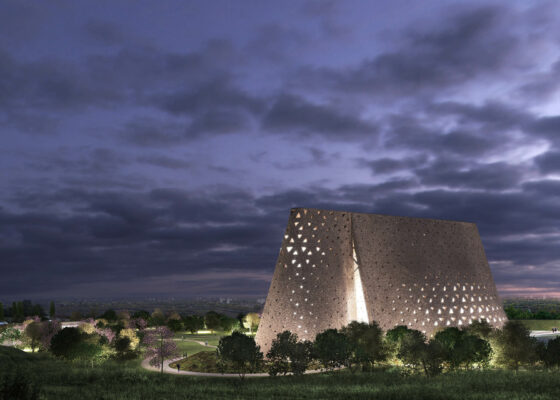
Il muro continua a lavorare come un grande segno astratto composto da un milione di mattoni, ma la sua collocazione rispetto allo specchio d’acqua e ai percorsi pedonali viene definita con maggiore precisione, così da rendere il complesso leggibile sia da lontano sia all’interno del percorso del visitatore.
In continuity with stage 1, The Wall remains laid over a reflecting pool that separates it from the ground and places it in a more abstract dimension. Water is conceived as an inviolable sacred space, a threshold between the physical world and a spiritual one. In the second phase, the relationship between the wall, the water basin and the surrounding landscape was refined: the volume’s proportions, its distance from the water surface and the design of the edges were carefully calibrated to enhance the sense of suspension.
The wall still acts as a large abstract sign made of one million bricks, but its position with respect to the water and to the pedestrian paths is defined more precisely, so that the whole complex is clearly legible both from a distance and along the visitor’s route.
Il percorso del visitatore e la sequenza degli spazi / The visitor’s path and the sequence of spaces
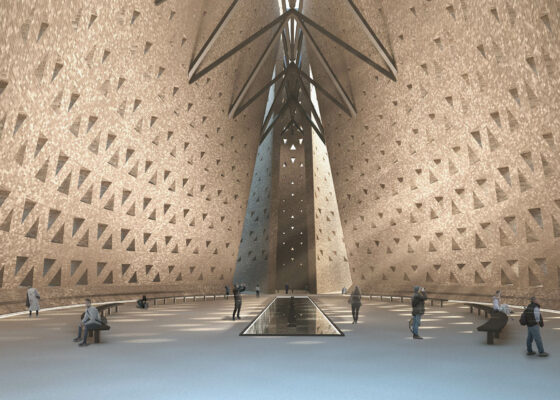
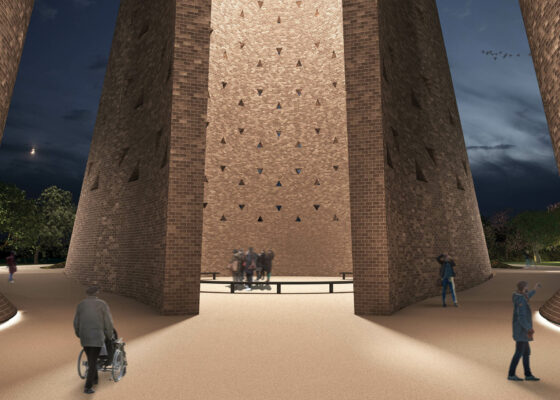
Il cammino inizia da un ambito più urbano, vicino all’accesso, e procede verso uno spazio di soglia a contatto con l’acqua e con il riflesso del muro. Da qui il visitatore avanza gradualmente verso zone via via più raccolte, dove il rumore del contesto esterno si attenua e la percezione si concentra sulla luce, sulle ombre proiettate dai mattoni, sui vuoti che attraversano la struttura. Il percorso non è mai rigidamente rettilineo: micro deviazioni e dilatazioni suggeriscono pause, punti di sosta, momenti di contemplazione.
The route starts from a more urban condition near the entrance and leads towards a threshold space in contact with the water and the reflection of the wall. From there, visitors gradually move towards increasingly intimate areas, where the noise of the outside world fades and perception focuses on light, on the shadows cast by the bricks, and on the voids cut through the structure. The path is never strictly linear: small shifts and widenings suggest pauses, resting spots and moments of contemplation.
Il percorso del visitatore dall’ingresso all’area interna più sacra è un viaggio sempre più profondo dentro la fede.
The visitor’s path from the access gate to the innermost sacred space is a journey deeper and deeper into faith.
Luce, materia e relazioni con il paesaggio / Light, material and relationships with the landscape
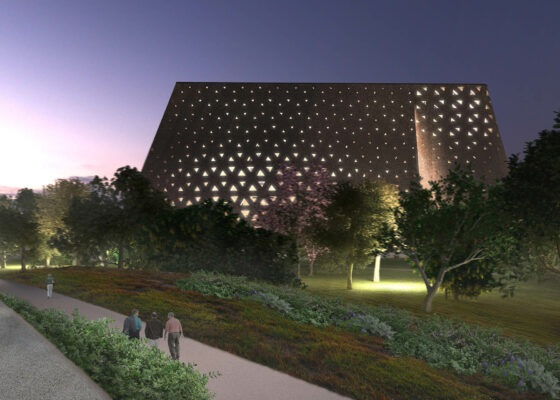
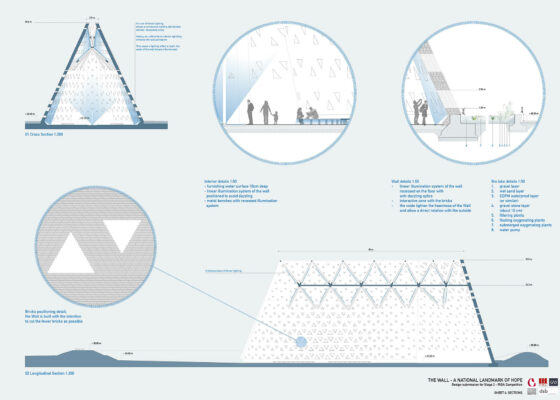
La seconda fase del concorso è stata l’occasione per approfondire il tema della luce e del rapporto con il cielo. I fori e le cavità che alleggeriscono The Wall diventano strumenti per far entrare tagli di luce diretta e diffusa, che cambiano nel corso della giornata. L’architettura è pensata per essere percepita in modo diverso al mattino, a mezzogiorno e al tramonto, quando il riflesso sull’acqua e l’intensità delle ombre trasformano la massa del muro in un volume quasi immateriale.
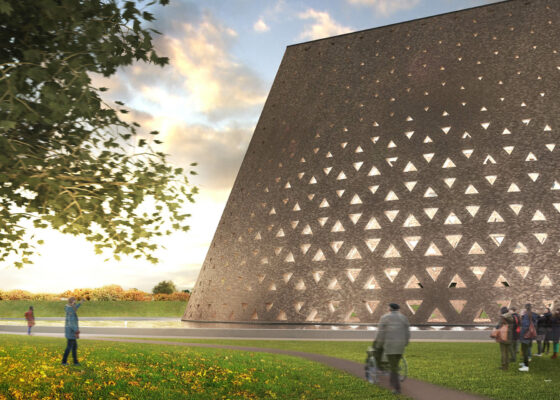
Il paesaggio circostante non è uno sfondo neutro, ma parte integrante dell’esperienza: il sito è articolato per permettere viste lontane, scorci radenti e affacci diretti sull’acqua, così che l’architettura possa essere letta come segno isolato oppure come parte di un sistema più ampio, in dialogo con l’orizzonte.
Stage 2 offered the opportunity to deepen the role of light and its relationship with the sky. The voids and perforations that lighten The Wall become devices to let in shafts of direct and diffuse light, changing throughout the day. The architecture is designed to be perceived differently in the morning, at noon and at sunset, when the reflection on the water and the intensity of shadows turn the massive wall into an almost immaterial volume.
The surrounding landscape is not a neutral backdrop but an essential part of the experience: the site is shaped to allow long-distance views, oblique perspectives and direct overlooks onto the water, so that the architecture can be read either as an isolated sign or as part of a larger system in dialogue with the horizon.
Esito della gara e valutazione della giuria / Competition outcome and jury’s feedback
Nel resoconto finale del concorso, il panel sottolinea come tutte le proposte finaliste abbiano raggiunto un livello molto alto di qualità e impegno. A proposito del nostro progetto, la giuria parla di un concept ben sviluppato, di un sito “articolato con successo” e di un’architettura giudicata “molto elegante”, apprezzando in particolare la presenza dell’acqua attorno all’edificio. Pur scegliendo infine un’altra proposta, i membri del panel dichiarano di essere stati colpiti dal lavoro svolto dal team e dalla coerenza con cui è stato portato avanti il concept.
Questa fase del concorso rappresenta per noi un momento importante di confronto internazionale, in cui è stato possibile testare un’idea architettonica forte su un tema complesso come quello di un monumento nazionale dedicato alla preghiera e alla memoria.
In the final competition report, the panel highlighted the very high standard and commitment demonstrated by all shortlisted teams. Regarding our proposal, the jury described the concept as well developed, the site as “successfully articulated”, and the design as “very elegant”, particularly appreciating the presence of water around the building. Although a different scheme was ultimately selected as the winner, the panel expressed how impressed they had been by the team’s work and by the consistency with which the concept had been pursued.
This second stage represents an important moment of international dialogue for our practice, allowing us to test a strong architectural idea on a complex theme such as a national monument dedicated to prayer and memory.
Panel Members Affiliation
Renato Benedetti Chair of the Panel, RIBA Adviser, Benedetti Architects
David Tomlinson Director, The Wall Developments
Richard Gamble Chief Executive, The Wall
Bob Blencowe Planning, The Wall
Marc Chapman Director, Gleeds
Advisers & Observers Affiliation
Sarah Jefferson Design Advisor, Ibstock Brick
Martin Edwards Director, Kirk Saunders
Jeremy Paley Associate Director, Kirk Saunders
Clare Payne The Wall
Joanne Wallis RIBA Competitions
Denise O’Toole RIBA Competitions